Community change is rarely as simple as choosing the right program or strategy.
What happens depends on how people experience the work, the relationships through which it happens, the wider environment around it, and what people learn along the way.
Arbour helps communities and organisations make these less visible dynamics easier to see, understand and work with.
The Problem
Arbour’s Approach
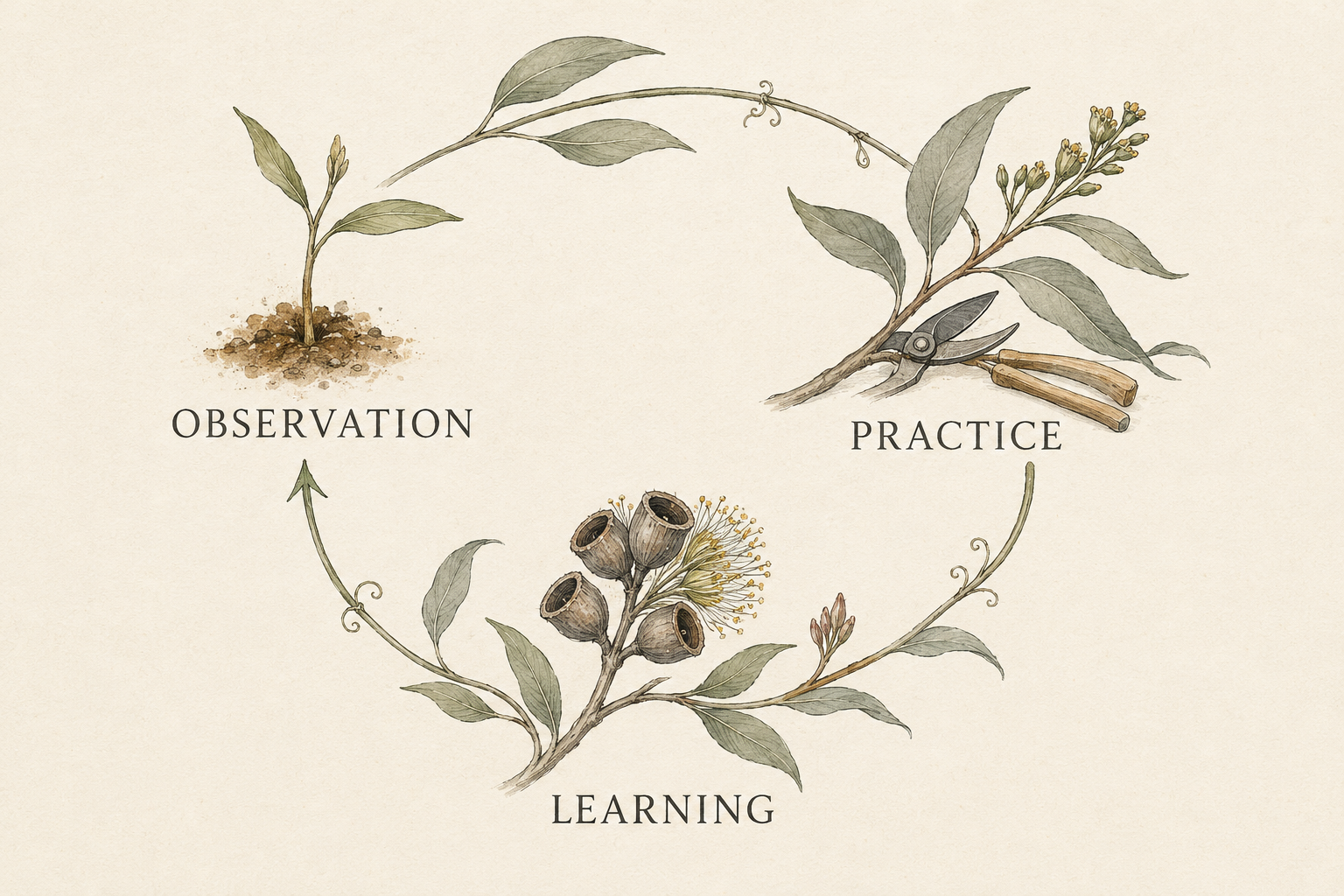
Observation
We look beneath the visible activity to understand what people are experiencing, how relationships are functioning, and what may be enabling or constraining change.
Practice
We translate those insights into more intentional ways of designing, leading, convening and working together.
Learning
We pay attention to what happens, make the causal logic more visible, and adapt the work as understanding grows.
This isn’t always a linear process. Observation shapes practice, practice generates new learning, and learning changes what we notice next.
What Arbour pays attention to
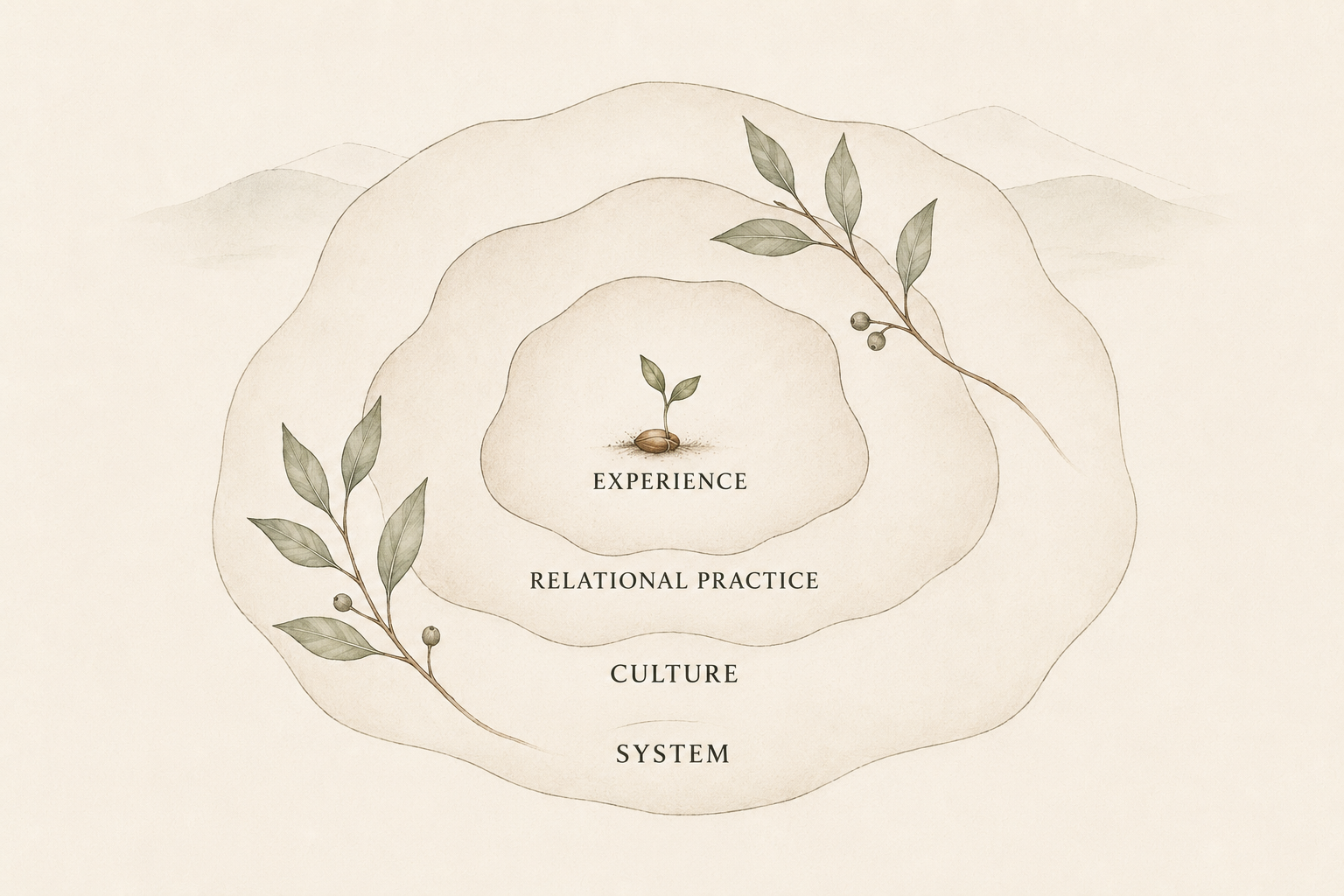
Arbour pays attention to change at four connected layers.
Experience
What are people actually experiencing? Do they feel welcomed, heard, trusted, capable and able to contribute?
Relational practice
What are people repeatedly doing that shapes those experiences - through the ways they listen, include, decide, share power and respond?
Culture
What expectations, habits and ways of working are those repeated practices creating?
System
What structures, policies, resources and patterns reinforce - or inhibit - those ways of working?
Change can begin at any of these layers. Arbour’s interest is in understanding how they interact - and where a shift might create effects elsewhere.
What this looks like in practice
Depending on the context, Arbour might:
help a team articulate how its work is expected to create change
explore what participants are experiencing beneath attendance and engagement data
identify the relational practices supporting trust, belonging or agency
create a learning framework around an emerging initiative
facilitate collective sensemaking across different perspectives
translate what is being learned into principles for future design and investment